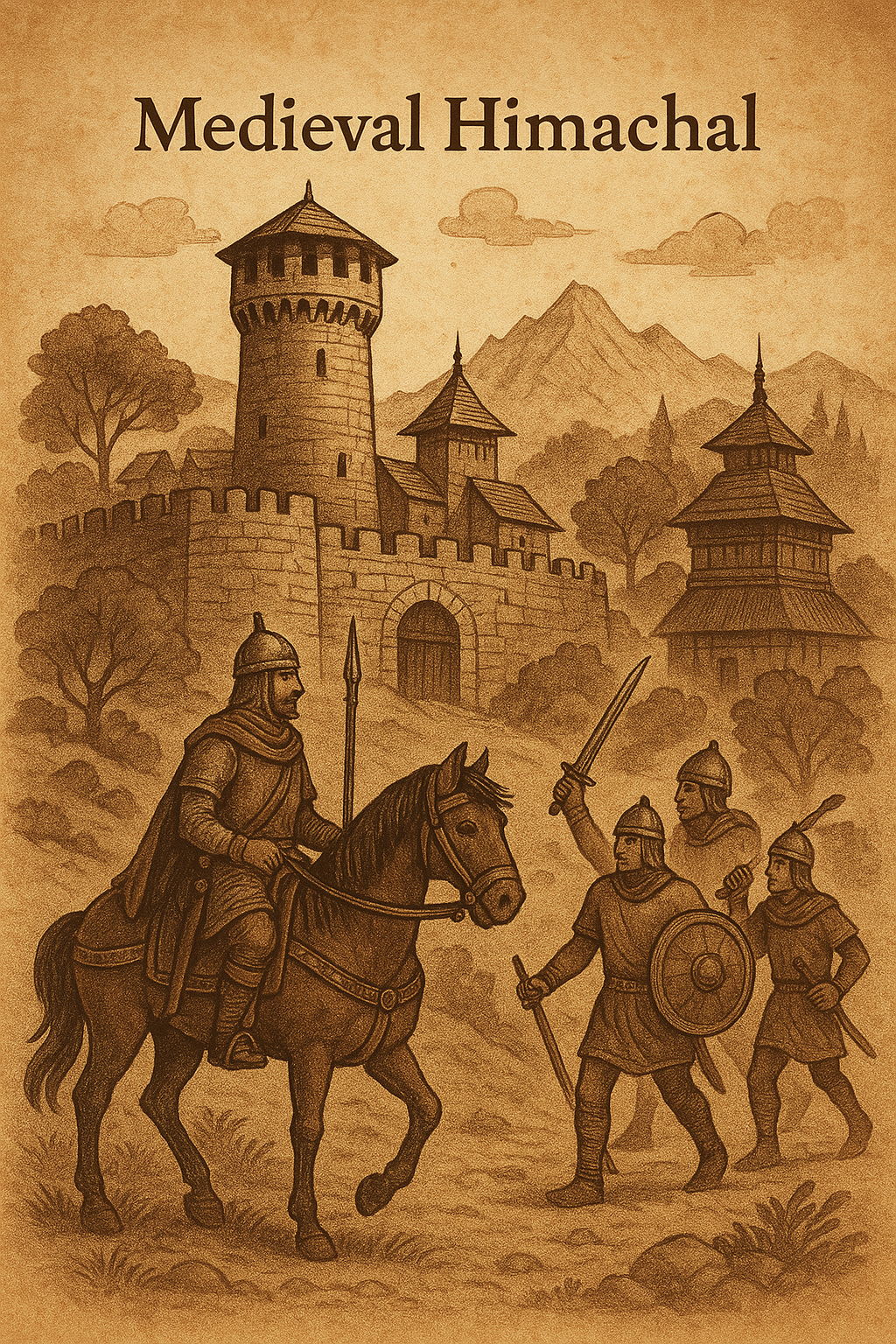
🛕Medieval Himachal

⭐1. Introduction

Medieval HImachal.png

The Medieval Period of Himachal Pradesh begins after the fall of the Gupta Empire and continues until the rise of modern hill states.

The period is known for:

  • Growth of hill kingdoms
  • Invasions by Mughals
  • Expansion of Katoch, Chamba, Kullu, Bushahr states
  • Increase in temples and architecture
  • Development of culture and trade routes
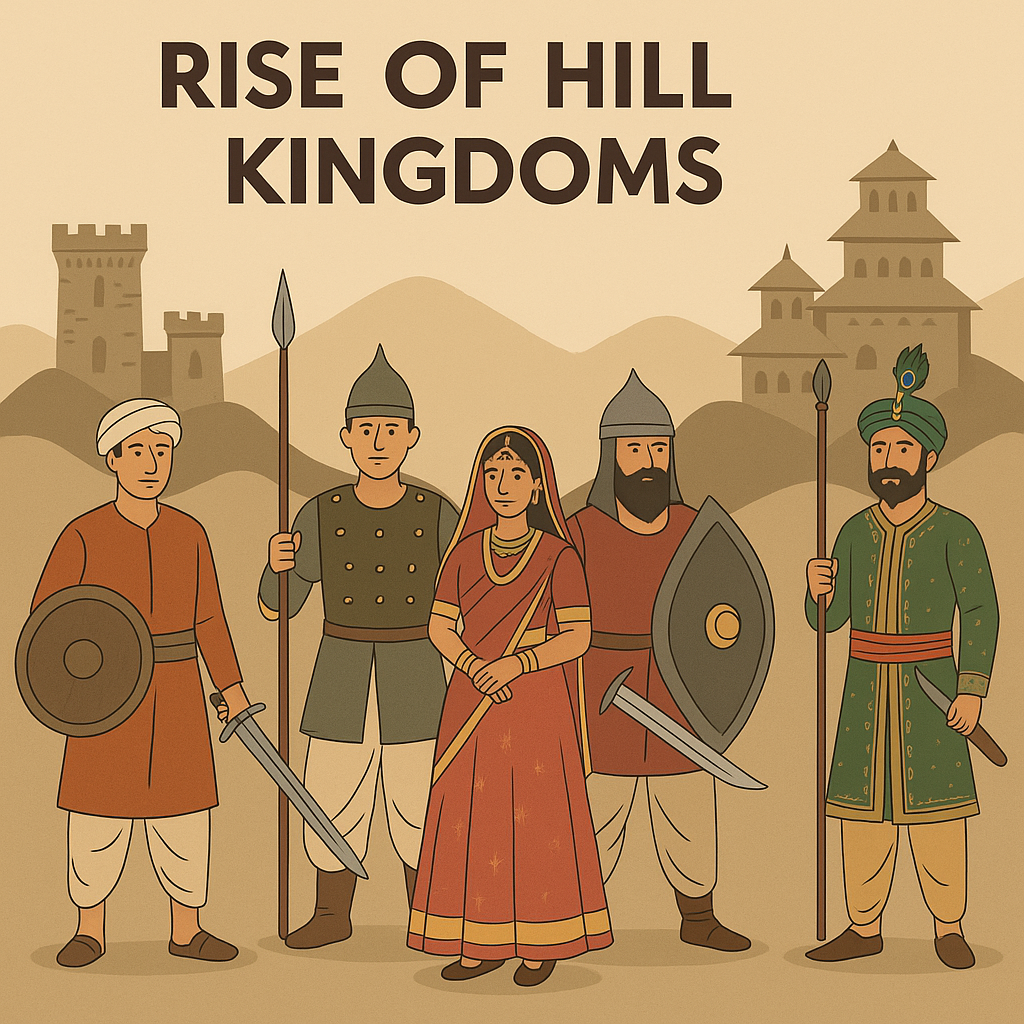
⭐2. Rise of Hill Kingdoms (Major States)

Rise of hill kingdoms.png

After 600 CE, many independent hill states emerged

✓1. Kangra State (Katoch Dynasty)

  • Oldest and strongest hill state
  • Capital: Nagarkot (modern Kangra)
  • Known for Kangra Fort
  • Katoch Dynasty is one of the world's oldest running dynasties

✓2. Chamba State

  • Founded by Maru Varman
  • Capital: Brahmpur, later Chamba
  • Famous rulers: Sahil Varman
  • Famous temples: Laxmi Narayan Temple

✓3. Kullu State

  • Ruled by Thakurs and later Pal dynasty
  • Known for Ragunath Temple, Dusheera festival

✓4. Bushahr State (Shimla region)

  • Capital: Kamru, later Rampur
  • Controlled important trade route to Tibet

✓5. Sirmaur & Bilaspur

  • Major powers in lower Himachal
  • Known for forts and temples

⭐3. Invasions in Medieval Himachal

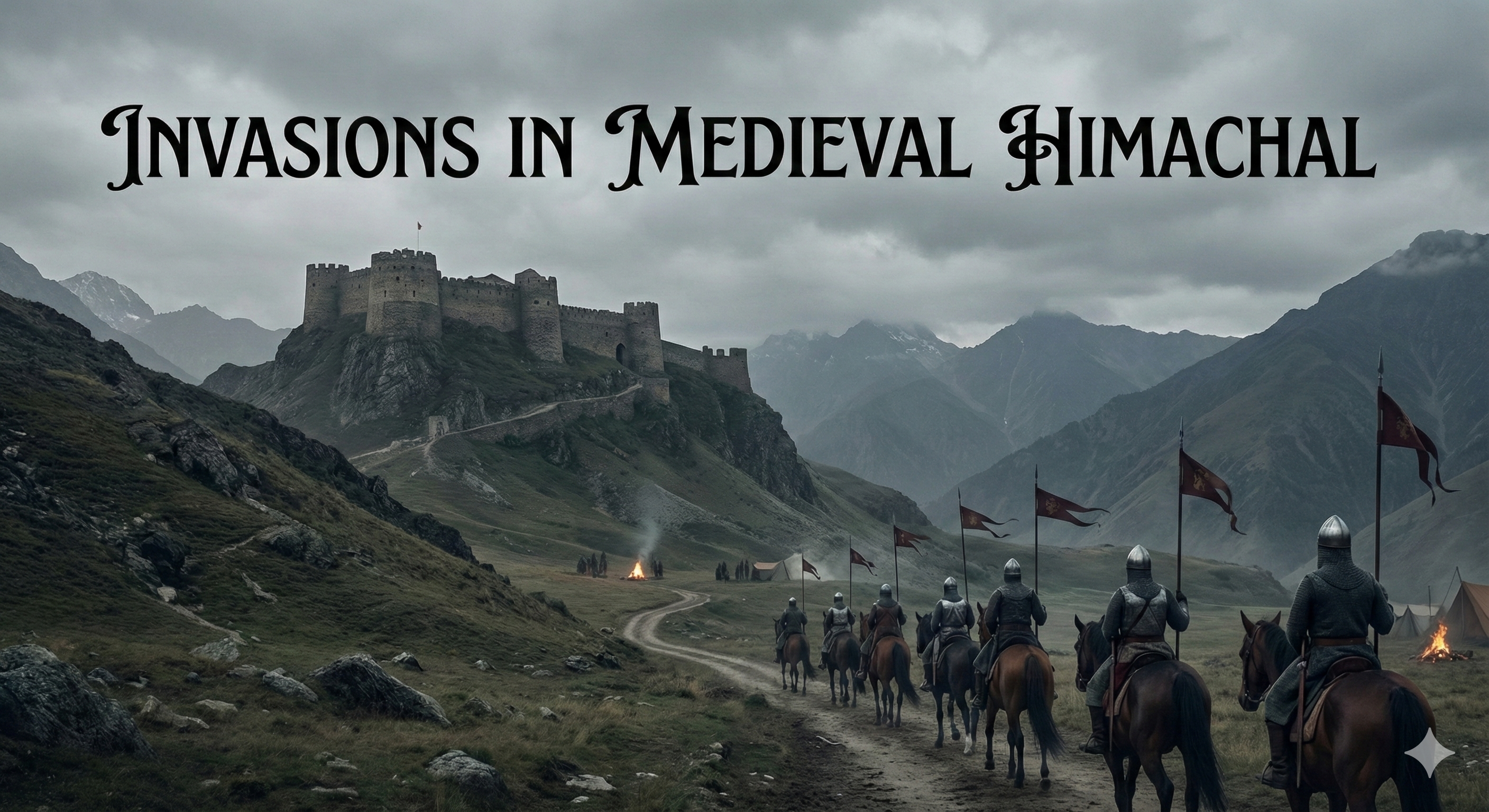
invasions in medievial himachal.png

✓1. Mahmud of Ghazni's invasion (1009 CE)

  • Attacked Kangra Fort
  • Looted enormous wealth
  • First major recorded invasion in Himachal

✓2. Mohammad Tughlaq (14th Century)

  • Tried to control Himachal but failed due to mountains

✓3. Timur and Sikander Lodhi

  • Minor influence on foothill areas

✓4. Mughals (Akbar, Jehangir, Shah Jahan)

  • Strong control over plains
  • Kangra Fort captured by Mughals
  • After Jehangir's death, Mughal control weakened

⭐4. Important Rulers & Dynasties

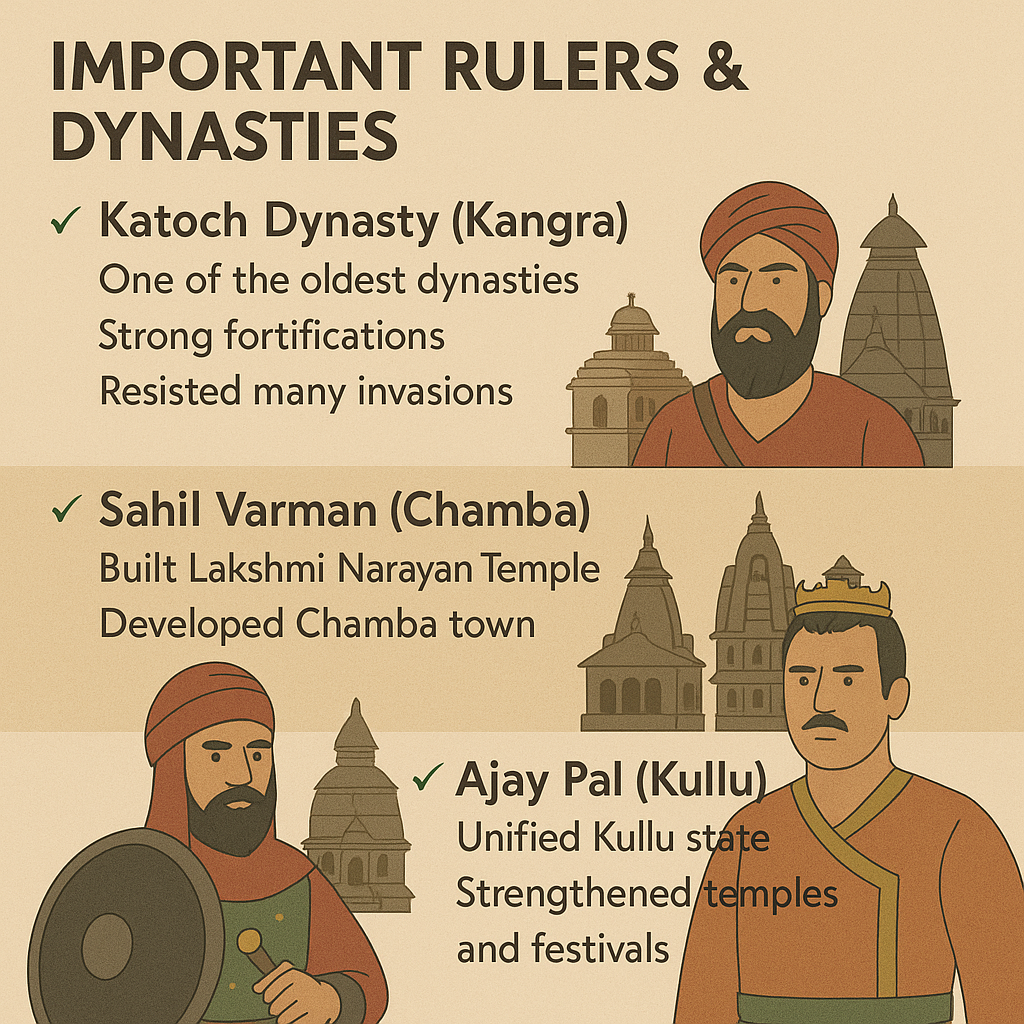
important rulers and dynasties.png

✓ Katoch Dynasty (Kangra)

  • One of the oldest dynasties
  • Strong fortifications
  • Resisted many invasions

✓ Sahil Varman (Chamba)

  • Built Lakshmi Narayan Temple
  • Developed Chamba town

✓ Ajay Pal (Kullu)

  • Unified Kullu state
  • Strengthened temples and festivals

⭐5. Architecture in Medieval Himachal

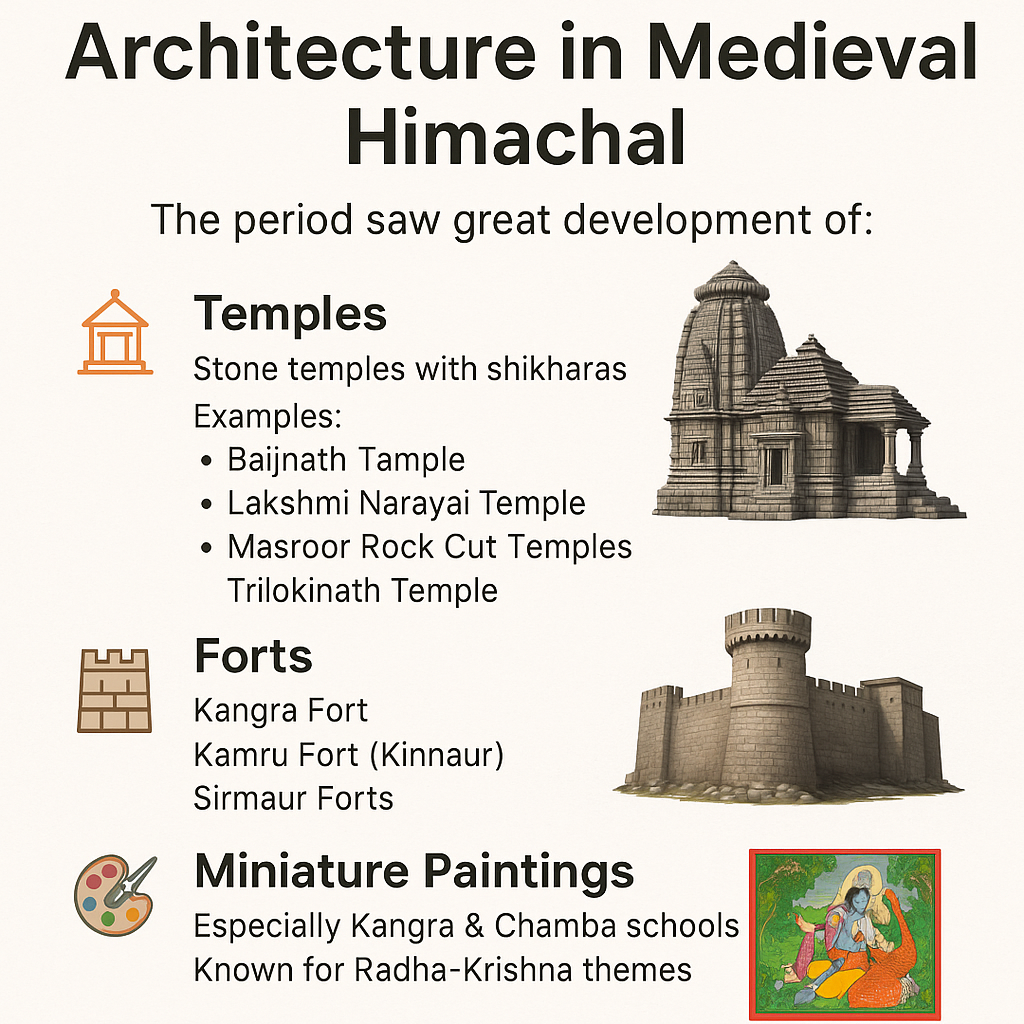
Architecture in medieval himachal.png

The period saw great development of:

🛕Temples

  • Stone tmeples with shikharas
  • Examples:
    • Baijnath Temple
    • Lakshmi Narayan Temple
    • Masroor Rock Cut Temples
    • Trilokinath Temple

🏰Forts

  • Kangra Fort
  • Kamru Fort (Kinnaur)
  • Sirmaur Forts

🎨Miniature Paintings

  • Especially Kangra & Chamba Schools
  • Known for Radha-Krishna themes

⭐6. Society & Culture

society and culture .png

✓ Religion

  • Shaivism and Vaishnavism popular
  • Buddhism in upper Himachal
  • Naga worship in lower hills

✓ Festivals

  • Kullu Dussehra
  • Minjar Fair (Chamba)
  • Sair festival

✓ Economy

  • Agriculture
  • Sheep & goat rearing
  • Trade with Tibet, Punjab
  • Wool, carpets, metal craft

⭐7. Important Medieval Temples

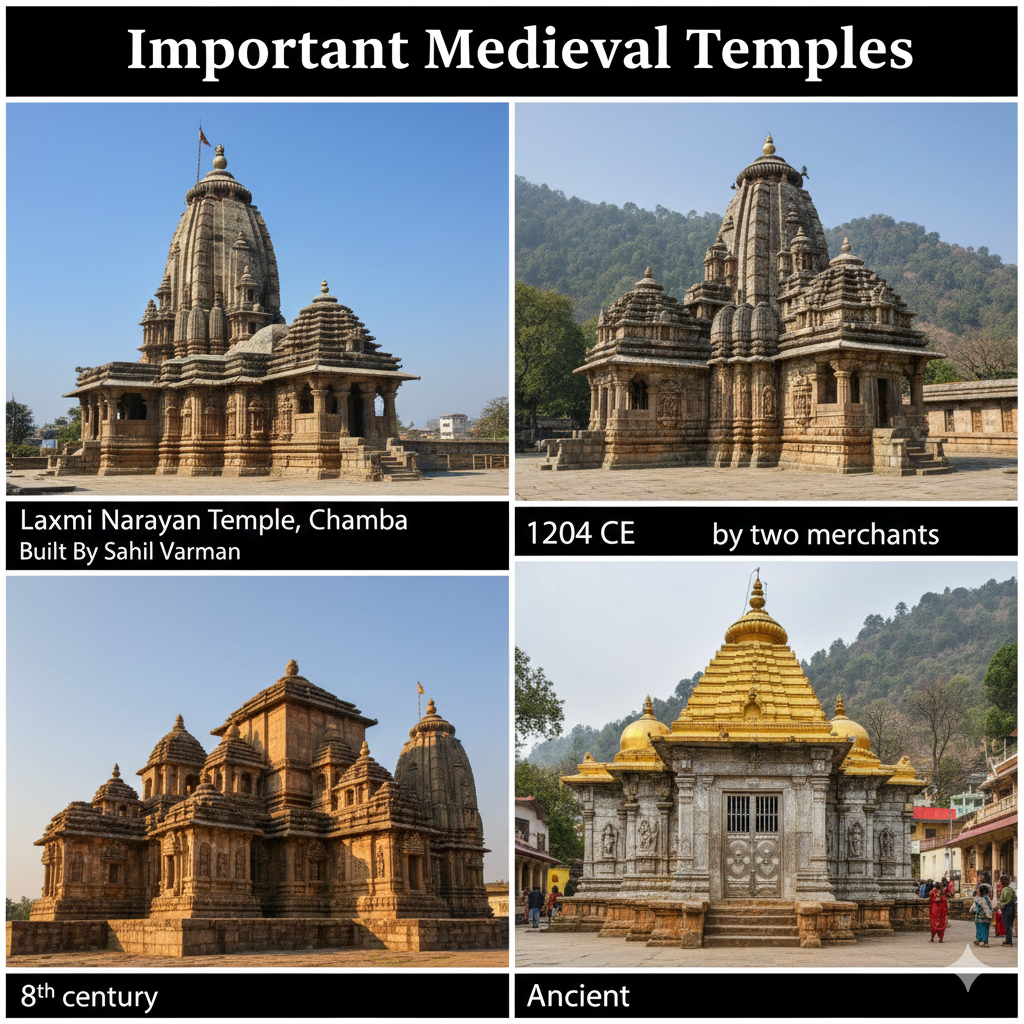
important medieval temples.png
Temple Location Built By
Laxmi Narayan Temple Chamba Sahil Varman
Baijnat Temple Kangra 1204 CE by two merchants
Masroor Temples Kangra 8th century
Jwalamukhi Temple Kangra Ancient

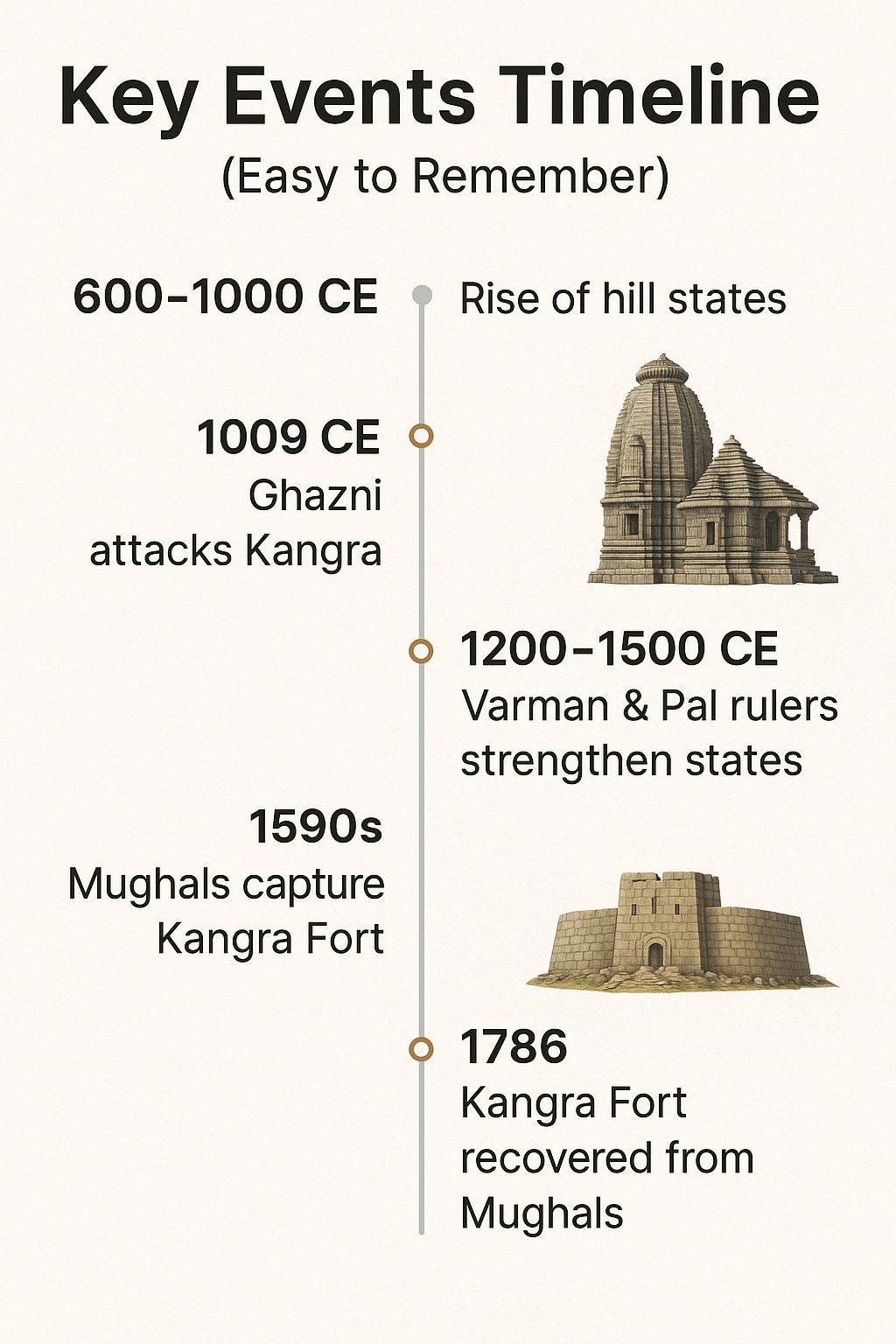
⭐8. Key Events Timeline (Easy to Remember)

Key events timeline.png
  • 600-1000 CE: Rise of hill states
  • 1009 CE: Ghazni attacts Kangra
  • 1200-1500 CE: Varman & Pal rulers strengthen states
  • 1590s: Mughals capture Kangra Fort
  • 1786: Kangra Fort recovered from Mughals

⭐9. Very Important Exam Questions

Q1. Who looted Kangra Fort in 1009 CE?

→ Mahmud of Ghazni

Q2. Which dynasty ruled Kangra?

→ Katoch Dynasty

Q3. Who built Lakshmi Narayan Temple?

→ Sahil Varman (Chamba)

Q4. Which state controlled trade route to Tibet?

→ Bushahr

Q5. Name two medieval temples of Himachal.

→ Baijnath Temple, Masroor Temple

Q6. Which Mughal ruler captured Kangra Fort?

→ Jehangir

Q7. Ajay Pal was ruler of which hill state?

→ Kullu